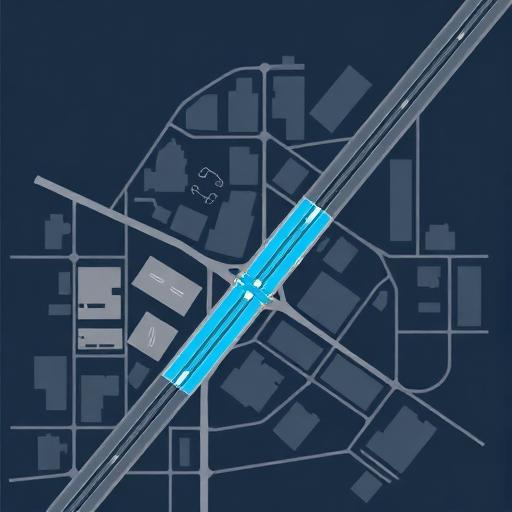
Location intelligence for retail

Better locations.
Sharper unit economics.

Space Intel gives retail operators the precise, place-based intelligence they need to choose, size, and operate stores that actually earn their cost of capital.

What we do

Insight at the resolution of a city block.

We combine proprietary spatial data, mobility signals, and your own operating data into a single source of truth for every retail decision — delivered as a connected stack of capabilities you can adopt one at a time, or compose end to end.

01

Best Location & Coverage

Hyper-local trade-area modeling, candidate-site scoring, and network-level coverage analysis tied directly to unit economics — every recommendation underwritten by real demand geography and defensible contribution margin per location, with sensitivities your finance team can stand behind.

02

Revenue & demand forecasting

Site-level sales, footfall, and demand forecasts that fuse mobility, demographics, competition, and your own performance data — delivered with confidence intervals you can plan against.

03

Customer segmentation & targeted marketing

Place-based segmentation that connects who your customers are with where they are — so every campaign lands closer to revenue.

04

Supply chain & last-mile optimization

Optimize warehouses, dark stores, and last-mile nodes against real demand geography — including emerging drone and aerial delivery layers planned around airspace, demand density, and operational constraints.

05

Competitive intelligence

Monitor competitor footprints, openings, and catchment overlap in near real time to defend share and identify under-served white space.

06

Smart city & public sector solutions

Location analytics, spatial data infrastructure, and planning support for municipalities and NGOs — from pedestrian-priority street studies to district-wide GIS systems.


How it works

Business intelligence, with a spatial dimension.

We help businesses make smarter decisions through the strategic use of spatial intelligence — extending the analytics you already trust with the layer that explains where demand actually lives.

  1. 01

    Actionable geo-analytics

    We leverage geographic data and cutting-edge analytics to turn raw location signals into decisions your operators can act on.

  2. 02

    Spatial layer on your data

    We embed spatial data directly into your existing analytical processes — no parallel stack, no rebuild — so every dashboard gains a location dimension.

  3. 03

    Built with your data team

    We deliver geo-analytical projects hand-in-hand with your data and analytics team, transferring know-how as we go.

  4. 04

    Competitor spatial intelligence

    We surface where your competitors are winning, opening, and overlapping — so you can defend share and move on white space first.

  5. 05

    Spatial inputs for ML & modeling

    We feed location-based features into your machine learning and modeling pipelines, producing sharper market strategies and location-based insight.

Case studies

Selected projects.

Click a project to expand its full story — challenge, approach, models, and outcome — all on the same page.

Location-based growth for a green delivery startup

Vego is a vegan and vegetarian food-delivery startup operating an electric courier fleet on the Asian side of Istanbul. To scale sustainably, they needed to know exactly which neighborhoods to enter next — and in what order — to unlock the most profitable growth.

Challenge

A growing operation with no spatial visibility into where loyal versus churning customers clustered, and no data-driven way to choose new service areas for its restaurant network.

Approach

We standardized internal order data alongside open demographic and competitor datasets, then ran spatial RFM analyses on order frequency, basket size and total spend to segment customers by location.

Models

Two parallel growth scenarios — one weighted toward residents, one toward daytime workers — were correlated to surface priority expansion zones and forecast service-area profitability for restaurants in the network.

Outcome

A prioritized expansion roadmap, restaurant-level service areas and a supply-chain plan — now powering Vego's next investment round and growth strategy.

  • Roadmap covering 12+ target neighborhoods across Istanbul's Asian side (~5M residents, ~1.8M daytime workers).
  • Restaurant-level service areas projected to lift order volume by 25–35% in priority zones.
  • Avg. delivery distance cut from 2.3 km to 1.6 km, driving a 26% reduction in cost per order alongside the volume uplift.

Order volume uplift in priority zones

2535%

0%50%

Avg. delivery distance (km)

Before2.3km
After1.6km

−26%

Cost per order reduction

Project visuals

From the case study

Operating context — Vego's electric courier network across the Asian side of Istanbul.
Spatial RFM analysis segmenting customers by order frequency, basket size and spend.
Correlated growth model — green tones mark priority expansion zones across districts.
Restaurant-level service areas with forecasted profitability in target districts.

Developing an integrated spatial data infrastructure for Eyüpsultan Municipality, Istanbul

As one of Istanbul's most historically significant and spatially complex districts, Eyüpsultan requires an integrated, data-driven urban management approach capable of supporting large-scale planning, infrastructure and governance decisions. To strengthen the municipality's decision-making capacity, a comprehensive GIS database was developed by integrating datasets produced by municipal departments, public institutions and open-data sources into a single spatial platform.

Challenge

Urban datasets related to planning, infrastructure, demographics, transportation and land use existed across disconnected systems and in multiple formats, limiting the municipality's ability to compare, analyze and manage information collectively. The absence of an integrated spatial data infrastructure made it difficult to produce coordinated, evidence-based planning and service decisions at the neighborhood and district scales.

Approach

Datasets were collected from municipal departments, public institutions and open-data sources through institutional coordination and official data requests. Raster, CAD, textual and GIS datasets were standardized, georeferenced and spatialized within a unified coordinate system.

Models

The resulting 50 GB geodatabase was organized under 15 main thematic categories — administrative boundaries, socio-economic structure, election data, land use, transportation, infrastructure, geological structure, natural assets, conservation areas, zoning plans and urban transformation — with 400+ subcategories, layers and thematic datasets enabling integrated visualization, querying, classification and spatial analysis.

Outcome

A municipality-wide spatial decision-support system serving Eyüpsultan — enabling evidence-based planning at parcel, building and network scale.

  • Single platform serving ~430,000 residents across 25 neighborhoods and ~242 km².
  • Unified 50 GB of data, 15 thematic categories and 400+ layers previously siloed across departments.
  • Cross-department data cycle improved from 3.4 days to 0.8 days — a ~76% faster turnaround on planning queries.

50 GB

Unified data

400+

Thematic category layers

Data cycle (days)

Before3.4d
After0.8d

Project visuals

From the case study

Hydrology layer — drinking-water network, historical İSKİ lines, dams, ponds, watershed boundaries and flood-risk zones across the district.
Citizen demand layer — projects, requests and complaints mapped against neighborhood population (2021) and socio-economic development index.
Heritage layer — urban conservation area, Istanbul Land Walls World Heritage Site buffer, monumental trees and registered civil-architecture examples.
Integrated land-use layer — residential, industrial, military, forest, agricultural and conservation zones with sport, health, market, park and cultural facilities.

Data-driven pedestrianization and walkability analysis for Istanbul's Historic Peninsula

A spatial decision-support model was developed to identify which streets within Istanbul's Historic Peninsula should be pedestrianized or redesigned as pedestrian-priority corridors. The study integrated multiple spatial variables — slope, cultural heritage density, commercial activity, public transportation accessibility, pedestrian mobility and user perception — into a unified analytical framework.

Challenge

Pedestrianization decisions within the Historic Peninsula were often evaluated through fragmented approaches focused primarily on physical street conditions. The district's complex urban structure, tourism intensity, historical layers and pedestrian dynamics required an integrated methodology capable of identifying streets with the highest pedestrian-oriented transformation potential.

Approach

Multiple spatial datasets were produced, standardized and integrated into a road-network database. Variables such as street slope, cultural inventory density, non-residential land-use intensity, public transportation mobility and survey-based mobility perception were weighted to generate a pedestrianization / walkability score for each street segment.

Models

Using spatial interpolation, network analysis and multi-criteria evaluation (AHP), all datasets were analyzed through street centerline geometries — enabling a comparative assessment of pedestrian-oriented transformation potential across the Historic Peninsula.

Outcome

A data-driven pedestrianization prioritization model for the Historic Peninsula — a spatial decision-support framework for public-space design, mobility planning and sustainable urban transportation strategies.

  • Covers the ~15 km² UNESCO-listed district hosting ~400,000 residents and 15M+ annual visitors.
  • Scored 1,000+ street segments and surfaced the top ~10% with the highest pedestrian-transformation potential.
  • Walkable public space expanded by 22–23% along the highest-impact corridors.
  • Projected +9% uplift in tax revenue from commercial units along these corridors, driven by higher pedestrian footfall.

Walkable public space expansion

2223%

0%50%

Tax revenue from corridor commercial units (indexed)

Before100
After109

1,000+

Street segments scored

Project visuals

From the case study

Public-transport accessibility — rail stations, 750 m pedestrian catchments and daily ridership intensity across the peninsula.
Cultural heritage density — concentration of registered monuments and historic inventory along the road network.
Commercial intensity — point-of-interest density of retail and non-residential uses fused with the street network.
Pedestrianization synthesis — final walkability score per street segment combining function, mobility, accessibility and cultural-heritage criteria.

Founders

Built by operators of spatial intelligence.

Space Intel is led by two urban planners who have spent their careers turning location data into operating decisions — across global quick commerce and the planning of one of the world's most complex cities.

Portrait of Jafar Najafli

Jafar Najafli

Co-founder · Group Senior Manager, Footprint Strategy at Delivery Hero

Connect on LinkedIn

Berlin-based urban planner with 9 years of deep GIS expertise and global location-strategy leadership across retail, quick commerce and urban development. Studied City and Regional Planning at Yıldız Technical University; MSc from Istanbul Technical University in spatial analytics, location strategy and real-estate development. Recognition & languages: Winner of the 2024 Yukselish (Ascension) National Competition in strategic project management out of 16,000 participants. Speaks English, German, Turkish, Azerbaijani and Russian.

  • Footprint optimization at scale: As Group Senior Manager at Delivery Hero, leads footprint optimization across 65 countries after architecting the company's proprietary location intelligence platform — already powering 90+ strategic openings and closures and over €16M in annual savings.
  • Quick-commerce growth leadership: At Getir, led a 10-person GIS team that scaled the dark-store network to 153 sites across 9 countries, lifting site profitability by 40% and cutting the site-selection cycle by 35%.
  • Public-sector & smart-city delivery: At KEYM (Turkey's leading urban renewal center), delivered 40+ spatial risk and real-estate evaluations across 9 municipal projects in Turkey and Uzbekistan, and led the Tashkent Urban Transformation initiative — securing €4.6M in development funding.
Footprint optimizationLocation intelligenceGIS & 3D GISCommercial economicsProject managementStakeholder leadership
Portrait of Melih Yılmaz

Melih Yılmaz

Co-founder · Head of Urban Strategy, Design and Transformation

Connect on LinkedIn

Istanbul-born urbanist (1992) with a BSc in City and Regional Planning and an MSc in Urban Design from Yıldız Technical University. More than a decade of experience across urban planning, urban design and spatial strategy.

  • Public-sector leadership: Since 2019, embedded within the public administration responsible for Istanbul's Historic Peninsula, today serving as Head of Urban Strategy, Design and Transformation.
  • Private practice & co-founding: Began in real-estate valuation and development, then joined İlke Planning — one of Türkiye's leading private planning firms — as Project Coordinator. In 2023, co-founded Mese Urban Lab and Space Intel.
  • Academia & publications: Lectures at university level on sustainable urbanism, mobility and urban design. Publishes on energy-efficient planning, smart urbanism, spatial data and location intelligence.
  • Awards: Recurring winner in national and international urban planning and design competitions.
Urban strategyUrban designSpatial data analyticsProject managementAcademic leadership

Contact us

Let's map your next growth move.

Reach out to our Berlin or Istanbul team — we'll get back to you within one business day.

Headquarters

Berlin

Branch

Istanbul

General inquiries
info@space-intel.org